
Toyota Camry: How to Choose Aftermarket Wheels
Purchasing new wheels isn't a simple task. On top of the way your Camry will look, safety and fitment issues will first have to be considered.
This article applies to the Toyota Camry 4th, 5th, and 6th generation (1997-2011).
Changing your wheels can drastically enhance your car's looks, but it can also have an effect on how your car rides, its gas mileage, and whether or not components connected to the wheels get damaged. So before running out and purchasing the first set of wheels you see, it's important to make sure the wheels fit correctly and look the way you want. Continue reading below for more information.

Materials Needed
- Tire iron
- Floor jack
- Jack stands
Step 1 – Decide on your budget
Before you even start looking at wheels, decide on how much you are willing to spend. Keep in mind that if you change the wheel diameter, you'll need to purchase a new set of tires as well. Wheels can range anywhere from $400 to $3,000 or more depending on material/composition, size, and quality. If you don't mind purchasing used wheels, several online stores can be your best friend in getting them for cheap. By deciding your budget beforehand, you'll be able to limit the time spent searching through various sources to find a set that's perfect for you.

Step 2 – Choose a style and color
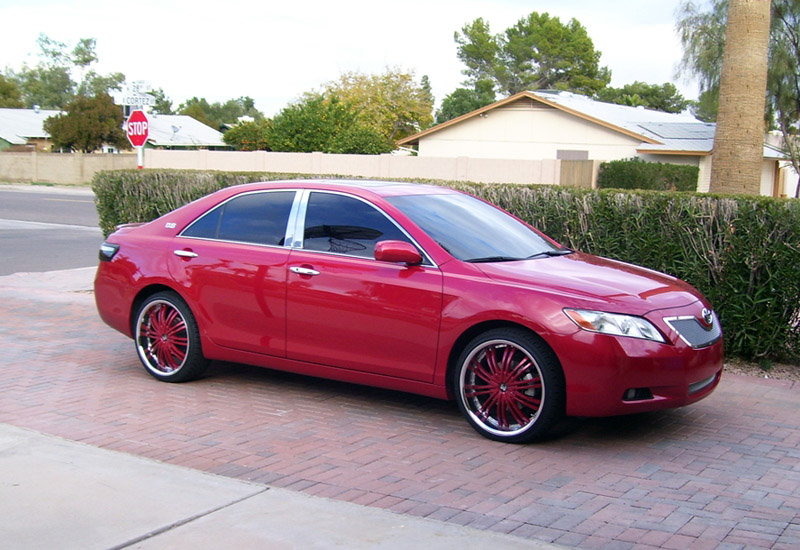
Wheels come in a variety of different designs and colors. There's no one set of wheels that is favored among all Camry owners, since it's all personal preference. For some people, going from the base model wheels to a set of higher-up trim level OEM (original equipment manufacturer) wheels is a common choice. Other people will go a step further and purchase a set of expensive aftermarket wheels in a wild color.
Step 3 – Choose a diameter
There are a few things to keep in mind when choosing the diameter of your wheel, such as:
- In terms of the overall weight of the wheel and tire, an added inch in wheel diameter is not equal to subtracting an inch from the sidewall of a tire. There are, however, very few exceptions to this and usually come into play when talking about high-end racing wheels. Here's a general example: wheel/tire Combo A uses a 17x7" wheel with a 28x8R17 tire, and wheel/tire Combo B uses a 16x7" wheel with a 28x8R16 tire. Wheel/tire Combo A weighs 55 lbs, while wheel/tire Combo B only weighs 45 lbs. So the greater weight will cause the fuel economy, engine, and braking performance to decline.
- The thinner the tire, the rougher the ride quality. The sidewall of the tire acts as a secondary shock to help cushion out bumps on the street. Every time you increase the wheel diameter while keeping the tire diameter the same, the ride quality will drop some because there's less tire sidewall.
Step 4 – Make sure the tires fit
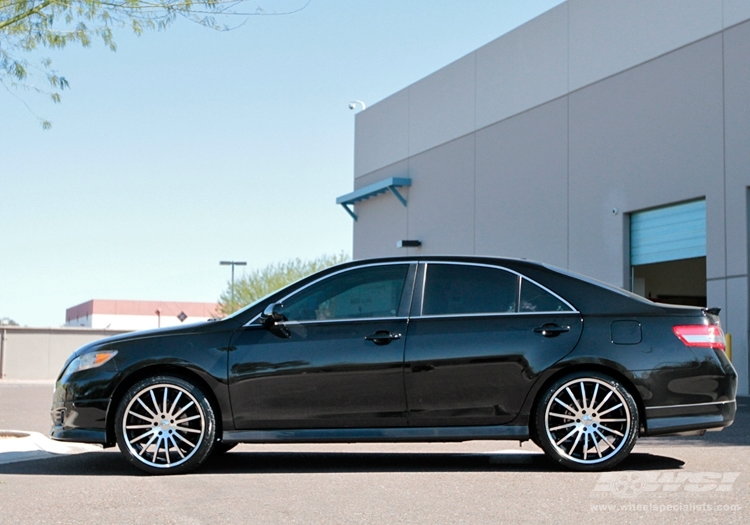
Unless you're building your Camry purely for show, you'll need to make sure the new wheels aren't going to cause rubbing issues. If you plan on staying with the stock size tires, you'll want to find wheels that are close to the same specifications as the factory wheels. Here are some specifications to consider:
- Bolt Pattern: Regardless of what wheel you choose, it will need to have the correct bolt pattern. The 1997 to 2011 Toyota Camry wheels have a 5x4.5" or 5x114.3mm bolt pattern.
- Width: Factory wheels have widths from 5.5" for base model wheels up to 6.5" for higher trim level wheels.
- Diameter: Don't go with a wheel diameter less than 15".
Here's something else to keep in mind: going with a wider wheel width will cause the tire to stick out of the wheel well more. It is recommended trying to the test-fit wheels before actually purchasing them; otherwise, you may find yourself dropping a tire size later to rid yourself of rubbing issues.
Pro Tip
Have a professional mount and balance your new set of wheels and tires to ensure they are properly installed.

Related Discussions
- Need Help Selecting Aftermarket Tires - CamryForums.com
- Looking Wheels - CamryForums.com
- Load Capacity 16" Alloy Wheels - CamryForums.com